Briefly Describe the Pulmonary and Systemic Circulation Pathways
This is where pulmonary circulation begins. Systemic circulation in physiology the circuit of vessels supplying oxygenated blood to and returning deoxygenated blood from the tissues of the body as distinguished from the pulmonary circulation.
Difference Between Pulmonary And Systemic Circulation Definition Circulation Pathway Importance
The main function of this circulation is to carry oxygen-poor blood to the lungs where it picks up O2 expels excess CO2 and water and carries oxygen-rich blood back to the heart.

. Pulmonary circulation pathway blood. Carries deoxygenated blood from the right side of the heart thru the pulmonary arteries to the lungs. Pulmonary circulation pathway quizlet.
The systemic circulatory system provides food and nutrients to all the organs tissues and cells in the body. Briefly describe the pulmonary and systemic circulation pathways. 6 rows The pulmonary and systemic circulation work harmoniously to maintain homeostasis but they do.
This blood is circulated from the aorta to the rest of the body by various major and minor arteries. Pulmonary circulation is the system through which oxygen is added to the blood. Pulmonary hypertension occurs when pressure in blood vessels that lead from the heart to the lungs is too.
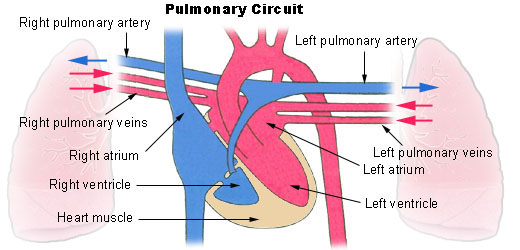
The oxygen in the lungs binds to. The deoxygenated blood shoots down from the right atrium to the right ventricle. The right ventricle pumps low-oxygen blood into the pulmonary artery which branches off into smaller and smaller arteries and capillaries.
1 body 2 inferiorsuperior vena cava 3 right atrium 4 tricuspid valve 5 right ventricle 6 pulmonary arteries 7 lungs 8 pulmonary veins 9 left atrium 10 mitral or bicuspid valve 11 left ventricle 12. In summary from the video in 14 steps blood flows through the heart in the following order. The blood flow in pulmonary circulation covers a shorter distance than the blood flow in the systemic circulation.
Pathway of Pulmonary Circulation From the right atrium the Deoxygenated blood is pumped through the tricuspid valve into the right ventricle. Humans and other mammals have two-circuit circulatory system s. One circuit is for pulmonary circulation and the other circuit is for systemic circulation the rest of the body.
Pulmonary and Systemic Circulations 3. What is the function of pulmonary circulation. Oxygenated blood is carried by pulmonary vein to left atrium.
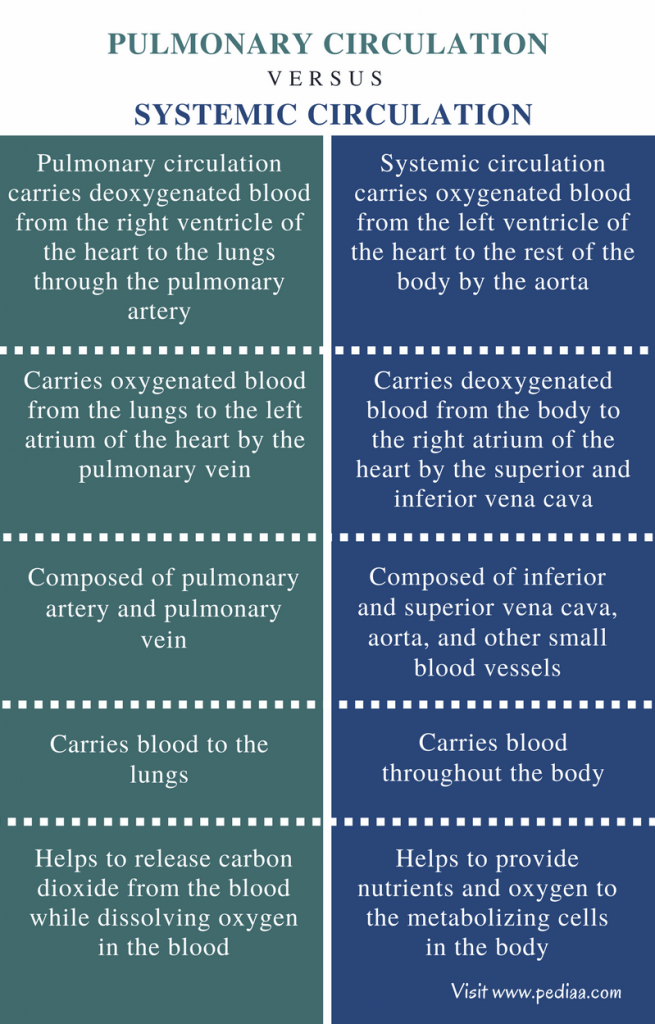
Systemic circulation carries blood away from the heart and supplies to all body organs tissues etc and returns deoxygenated blood from organs to heart. Pulmonary circulation carries oxygenated blood from the lungs to the left atrium of the heart by the pulmonary vein. The oxygenated blood shoots from the left atrium to the left ventricle below to begin.
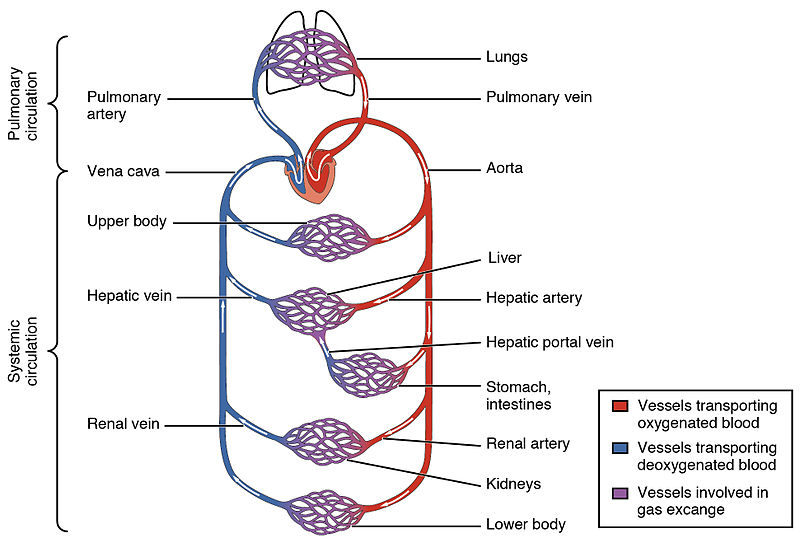
The systemic circulation is the portion that brings oxygenated blood to the rest of the body. Pulmonary circulation Here the blood without oxygen called as the deoxygenated blood travels from the right side of the heart to the lungs. In the lungs blood moves through tiny vessels called capillaries.
The capillaries form a fine network around the pulmonary vesicles grape-like air sacs at the end of the airways. Systemic circulation occurs between the heart and the rest of the body except for the lungs. Pulmonary circulation pathway lungs.
Pulmonary circulation pathway steps. Pulmonary circulation Occurs only between the heart and the lungs. Deoxygenated blood is sent from the heart to the lungs where it gathers oxygen and leaves carbon dioxide behind and then is sent back to the heart to be distributed to the.
The pulmonary system is the path blood takes through the lungs receiving fresh oxygen and releasing carbon dioxide. During diastole the increased aortic pressure above the valves forces blood into the coronary arteries and thence into the musculature of the heart. 14 Steps of Blood Flow Through the Heart.
Correct pathway of pulmonary circulation. Coronary arteries deliver oxygenated blood from the aorta to the heart. The heart gets its own supply of blood through the coronary circulation.
After moving through the pulmonary circuit oxygen-rich blood in the left ventricle leaves the heart via the aorta. There are two circulatory paths in the cardiovascular system namely pulmonary circulation and systemic circulation. The blood moves to the lungs exchanges carbon dioxide for oxygen and returns to the left atrium.
After receiving oxygen and delivering carbon dioxide in the pulmonary capillaries returns oxygenated blood thru the pulmonary veins to the left atrium where the systemic circulation begins. Pulmonary circulation Pulmonary circulation carries deoxygenated blood away from the heart to the lungs and returns oxygenated blood back to the heart. The heart then pumps it out of the right ventricle and into the pulmonary arteries to begin pulmonary circulation.
Pulmonary circulation path allows for blood circulation through the lungs for oxygenation of blood while systemic circulation path allows for blood circulation of the oxygenated blood through other parts of the body. Oxygenated blood is pumped into left ventricle through the opening of bicuspid valve mitral valve. Coronary circulation part of the systemic circulatory system that supplies blood to and provides drainage from the tissues of the heart.
In the human heart two coronary arteries arise from the aorta just beyond the semilunar valves. Systemic circulation carries deoxygenated blood from the body to the right atrium of the heart by the superior and inferior vena cava. Blood is pumped from the left ventricle of the heart through the aorta and arterial branches to the arterioles and through capillaries where it reaches an equilibrium with the.
The pulmonary circulation is the portion that brings blood to the lungs and back. Pulmonary circulation is the system of transportation that shunts de-oxygenated blood from the heart to the lungs to be re-saturated with oxygen before being dispersed into the systemic circulation. In humans blood travels through two types of pathways the pulmonary circulation pathway and the systemic circulation pathway.
As each atrium and ventricle contract blood is pumped into certain major blood vessels and from there continues through the circulatory system. The systemic circuit is the path of circulation between the heart and the rest of the body excluding the lungs.
Seer Training Circulatory Pathways
Pulmonary And Systemic Circulations Advanced Read Biology Ck 12 Foundation
Difference Between Pulmonary And Systemic Circulation Definition Circulation Pathway Importance


Comments
Post a Comment